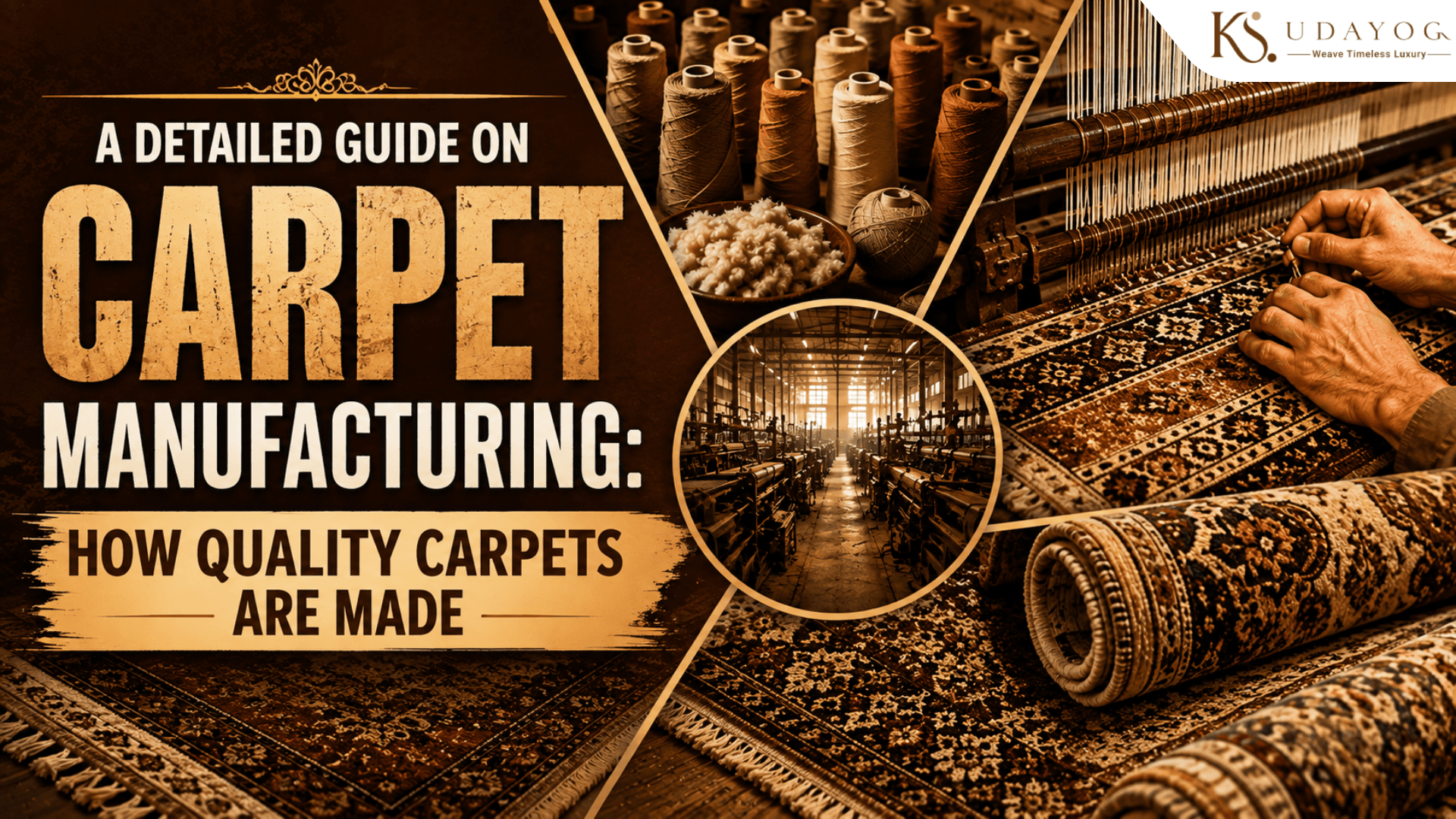
Have you ever looked at a carpet and wondered what actually goes into making it? The finished piece may appear simple, but there can be hours of planning, skilled work, careful material selection, and detailed finishing behind that surface.
A carpet's quality does not begin when it reaches a showroom. It starts much earlier, with the selection of fibres and yarns, the construction method, the way colours and patterns are developed, and the attention given to finishing. Even small differences during production can affect how a carpet feels, looks, and performs after installation.
The process also varies depending on the type of carpet being produced. A handmade carpet follows a very different route from a woven or machine-made carpet, although both require careful control at different stages.
So, how does a carpet move from raw material to a finished product? Let's take a closer look at the carpet manufacturing process and understand what happens at each stage, along with the details that can make a noticeable difference to the final carpet.
Carpet Manufacturing: What Goes Into Making A Quality Carpet?
The carpet manufacturing process cannot be judged by one feature alone. Quality comes from how these individual stages work together to produce a finished carpet that meets the required appearance and performance standards.
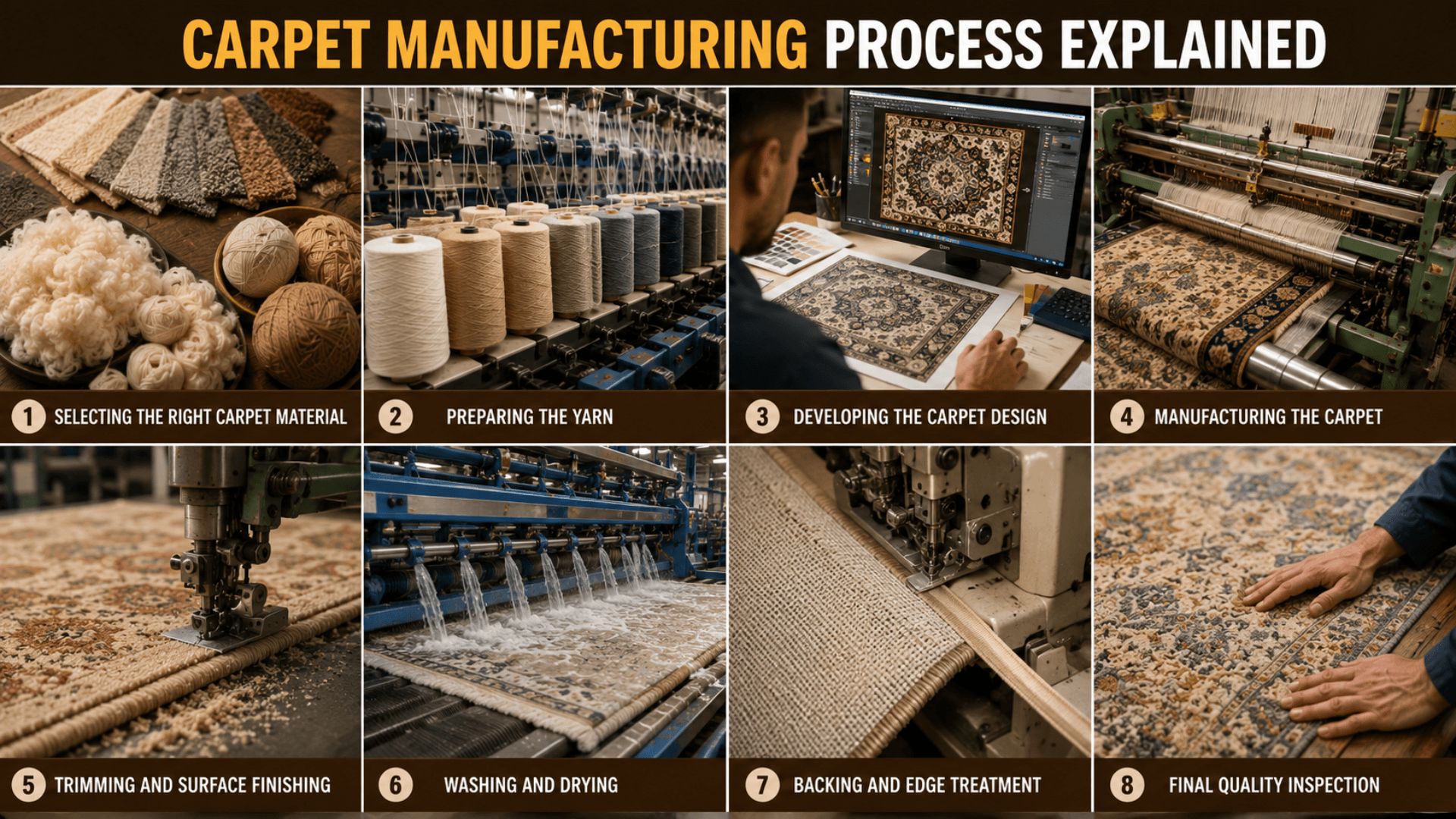
Step 1: Selecting The Right Carpet Material
Every carpet begins with a material decision. Before a design is woven, tufted, or knotted, manufacturers need to determine which fibre will deliver the required feel, appearance, and performance, and what carpet material is right.
The selection depends on where the carpet will be used and what the finished product needs to achieve.
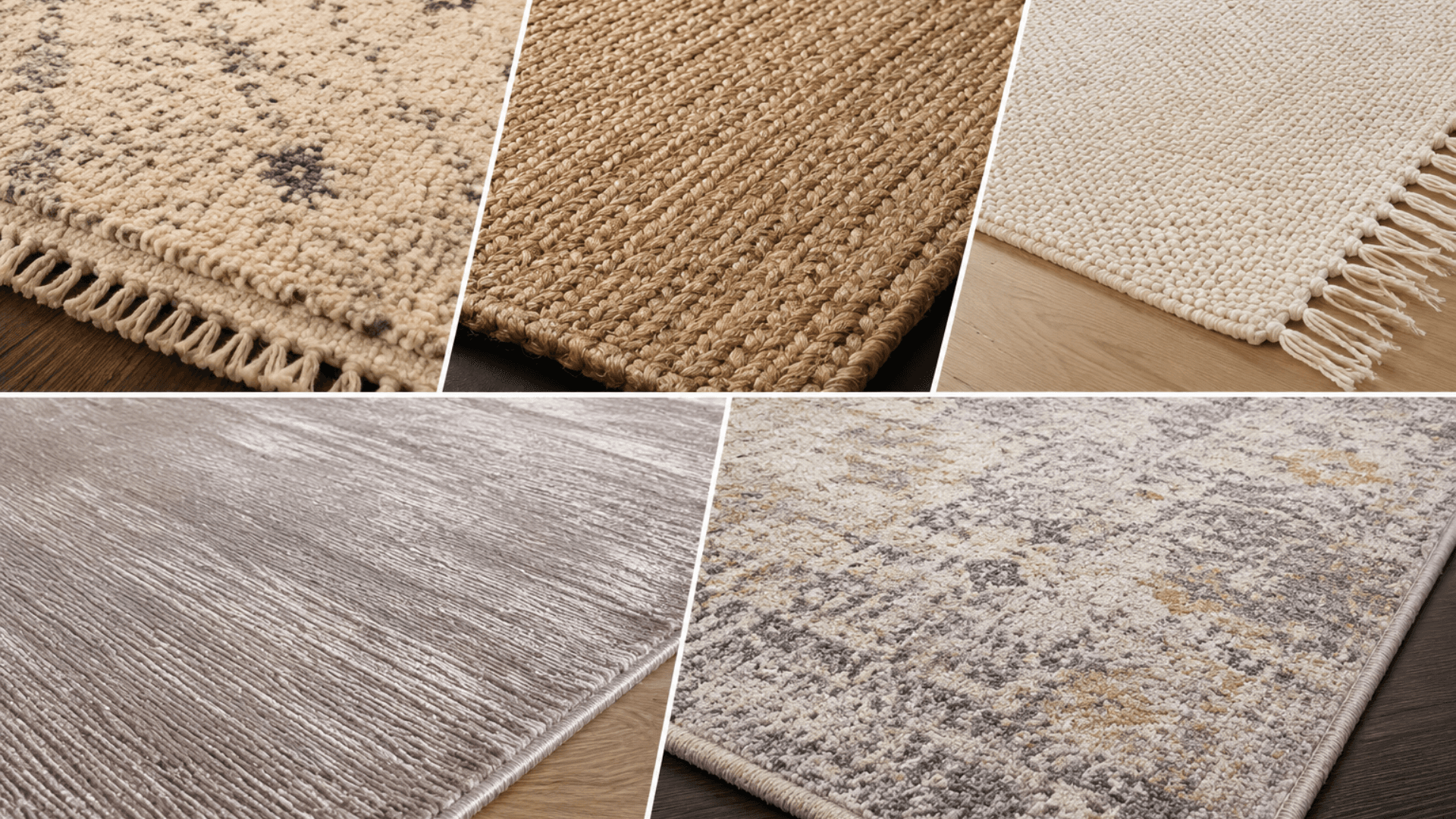
- Wool: Wool is valued for its natural softness, warmth, resilience, and premium appearance. It is commonly used for handmade carpets and high-end interiors where texture and long-term performance matter.
- Cotton: Cotton creates a softer, lighter feel and works well for carpets and rugs intended for relaxed residential or decorative settings. Its ability to absorb dyes also allows manufacturers to develop varied colours and patterns.
- Jute: Jute brings a natural texture and earthy appearance. It is often used when the design calls for an organic look, although moisture exposure and maintenance requirements need consideration.
- Viscose: Viscose can create a smooth, lustrous surface that gives carpets a more decorative appearance. It is often selected to add visual richness, particularly in designs where sheen is part of the desired effect.
- Synthetic Fibres: Polypropylene, polyester, nylon, and other synthetic fibres are used where manufacturers need specific performance characteristics. Depending on the fibre, these carpets can offer good wear resistance, easier maintenance, colour flexibility, and cost advantages.
Material selection is therefore not simply about finding the most expensive fibre. Manufacturers consider the carpet's intended use, construction method, design, expected foot traffic, maintenance requirements, and target price before finalising the material.
That decision sets the foundation for everything that follows in the production process.
Step 2: Preparing The Yarn
Once the material is selected, the next stage is preparing it for carpet production. Raw fibres cannot always be used directly. They may need cleaning, blending, spinning, twisting, or other preparation depending on the material and the type of carpet being produced.
Yarn thickness, strength, texture, and twist can influence the final surface of the carpet. A thicker yarn may create a fuller appearance, while finer yarns can help achieve more detailed patterns.
Colour preparation also takes place at this stage when dyed yarn is required. Manufacturers need to maintain accurate shades, particularly for larger orders where multiple carpets must have a matching appearance.
The objective is simple: prepare yarn that can perform properly during construction and deliver the intended look and feel in the finished carpet.
Step 3: Developing The Carpet Design
A carpet design needs to be translated into a practical production plan before manufacturing begins.
Designers may work with colours, motifs, geometric patterns, borders, textures, and different pile effects depending on the product. For customised orders, the design may be developed according to a buyer's dimensions, colour palette, interior theme, or brand requirements.
The construction technique also influences how much detail the design can carry. Handmade carpets can offer intricate artistic patterns, while woven and machine-made carpets can provide excellent consistency across larger quantities.
Colour matching deserves particular attention. A shade that looks correct on a digital screen or paper sample may appear different when applied to actual yarn. Physical samples and production references therefore help maintain the intended appearance.
Once the design and specifications are approved, production can move forward.
Step 4: Manufacturing The Carpet
This is where the selected yarn becomes an actual carpet. The construction method depends on the product being manufactured.
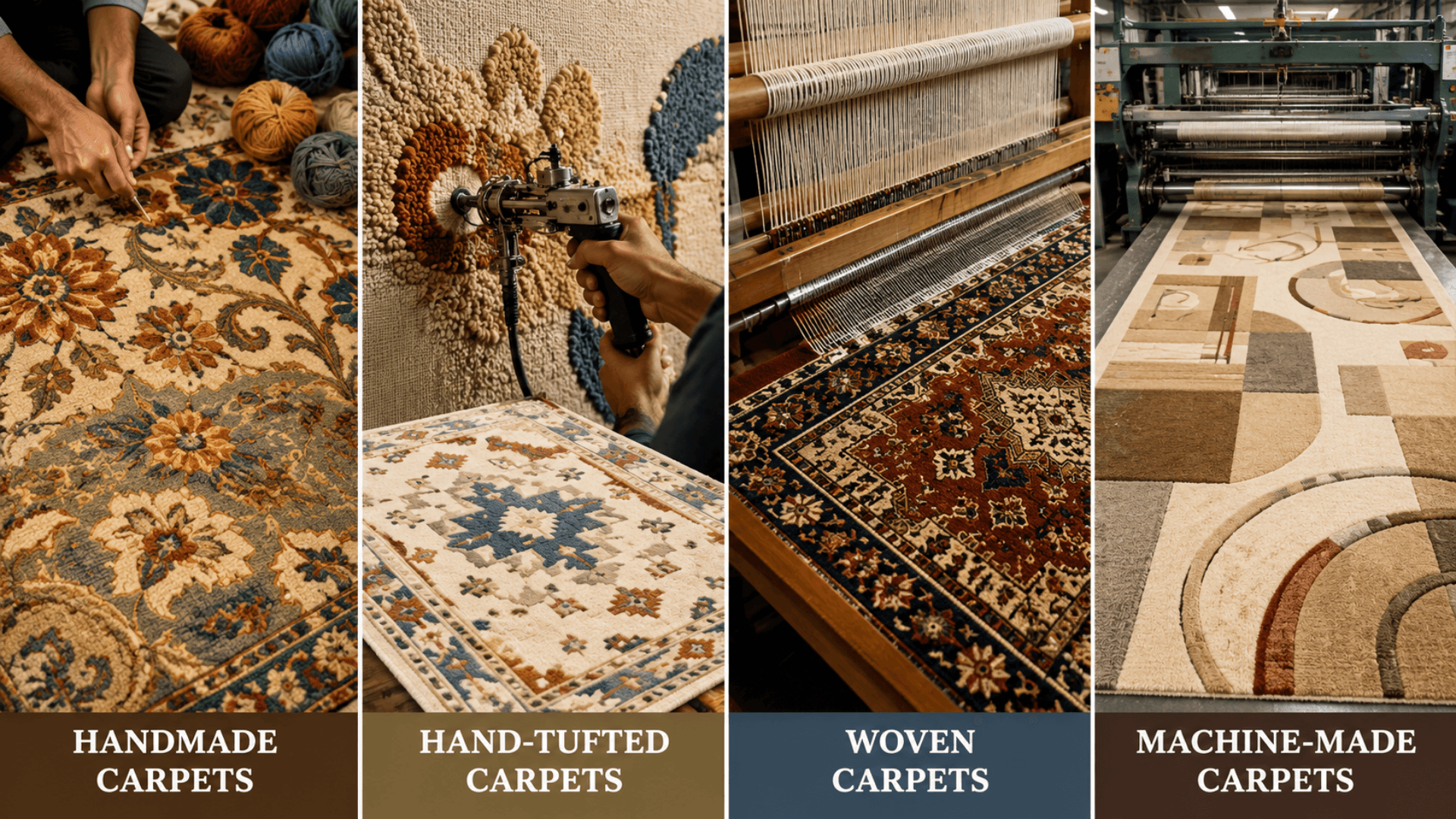
1. Handmade Carpets
Handmade carpets are created through skilled manual work. Depending on the technique, artisans may knot or work yarn into the foundation individually, gradually building the pile and pattern.
Hand-knotting is a time-intensive process because each knot contributes to the structure of the carpet. The density, yarn, knotting technique, and craftsmanship can all influence the final character of the piece.
This method is often associated with premium and distinctive carpets where craftsmanship and individuality are important.
2. Hand-Tufted Carpets
Hand-tufted carpets are made by inserting yarn into a prepared backing with a tufting tool. The yarn forms the pile on the surface, while the backing provides structural support.
This technique allows manufacturers to produce detailed designs and different pile heights without requiring the same amount of time as traditional hand-knotting.
It is widely used for customised carpets because designers have considerable flexibility with shapes, patterns, colours, and textures.
3. Woven Carpets
Woven carpets are produced by interlacing yarns through a loom. The construction creates the carpet structure as the warp and weft yarns work together.
This method can produce strong, structured carpets with consistent patterns and finishes. Depending on the loom and construction, woven carpets can be developed in different textures, densities, and designs.
4. Machine-Made Carpets
Machine-made carpets use automated equipment to create the desired construction at a faster production rate. This approach is useful when buyers need larger quantities with consistent dimensions, patterns, and specifications.
Machine production does not mean that quality is automatic. Yarn selection, machine settings, design accuracy, finishing, and inspection still influence the final result.
The manufacturing method should therefore be selected according to the product requirements rather than treating one technique as universally superior.
Step 5: Trimming And Surface Finishing
After the carpet has been constructed, its surface may require careful finishing. Loose or uneven fibres can be trimmed to achieve the required pile height and create a cleaner appearance.
This stage can make a visible difference to the final product. An even surface allows the pattern to appear clearer and gives the carpet a more refined finish.
Edges also receive attention. Proper edge finishing helps maintain the carpet's shape and protects the construction from unnecessary fraying or damage during handling.
For customised carpets, finishing may also involve shaping the product according to specific dimensions or design requirements.
Step 6: Washing And Drying
Some carpets undergo washing after construction. The purpose can vary depending on the material and manufacturing technique, but washing may help clean the surface, remove production residue, soften certain fibres, or develop the desired appearance.
The process needs to match the carpet material. Excessive moisture, unsuitable chemicals, or poor drying conditions can affect fibres, colours, backing, or overall structure.
Drying is therefore just as important as washing. The carpet needs suitable conditions that allow moisture to leave the material without compromising its shape or finish.
Manufacturers pay attention to this stage because the carpet should reach the buyer in a clean, dry, and presentable condition.
Step 7: Backing And Edge Treatment
Depending on the carpet construction and intended use, a backing layer may be added or treated to provide additional support.
Backing can influence the carpet's stability, structure, handling, and suitability for particular applications. The specification varies between products, so the backing should match the construction rather than being treated as a standard feature for every carpet.
Edge treatment is also checked carefully. A properly finished edge gives the carpet a neat appearance and helps protect it during installation and everyday use.
For commercial and hospitality projects, these details become especially important because carpets may need to withstand frequent movement, handling, and cleaning.
Step 8: Final Quality Inspection
A carpet is not ready for dispatch simply because manufacturing has finished. It still needs to pass a final inspection.
Manufacturers may check several aspects, including:
- Dimensions and shape
- Colour and pattern accuracy
- Surface appearance
- Pile consistency
- Edge finishing
- Backing condition
- Visible defects
- Overall cleanliness
- Order specifications
For bulk orders, consistency becomes particularly important. A buyer ordering several carpets for a hotel, retail collection, or commercial project expects the products to maintain the agreed specifications across the order.
Any issue identified during inspection can be addressed before packing and dispatch. This final check protects both the manufacturer's standards and the buyer's expectations.
What Makes One Carpet Better Than Another?
Two carpets can use the same fibre and still deliver different results. The difference often comes from construction, yarn preparation, density, finishing, craftsmanship, and quality control.
For buyers, this is why simply asking whether a carpet is made from wool, cotton, or synthetic fibre may not provide the complete answer. The manufacturing method and production standards matter too.
A carpet intended for a luxury bedroom may prioritise softness and visual richness. A hotel corridor needs stronger performance under repeated foot traffic. A retailer may need attractive designs at a price that works for its customers.
The better product is the one whose material, construction, and finishing match its intended application.
How To Identify A Well-Made Carpet?
A carpet can look impressive at first glance, but its real quality becomes clearer when you examine a few practical details. Before placing an order, especially for a hotel, showroom, retail collection, or large project, pay attention to the following:
- Even Pile: The surface should have a reasonably even texture without obvious thin patches or loose areas.
- Secure Edges: Edges should be neatly finished and firmly constructed to reduce premature fraying.
- Consistent Color: Colors should appear uniform and match the approved sample or design specifications.
- Strong Construction: The carpet should feel properly formed rather than loose, weak, or poorly structured.
- Clean Backing: The underside should be properly finished, with no obvious gaps, loose material, or construction defects.
- Accurate Size: Dimensions should match the agreed specifications, particularly for customised and commercial orders.
- Colour Fastness: The colour should remain stable under normal use and suitable cleaning conditions.
- Clear Material Details: A reliable manufacturer should be able to explain the fibre, construction method, backing, and care requirements.
These checks may seem small, but together they give you a much clearer picture of the carpet's construction. For bulk buyers, checking a physical sample before confirming the complete order is also a sensible step.
Carpet Manufacturing For Hotels, Retailers, And Bulk Buyers
Commercial buyers usually have requirements that go beyond selecting a design from a catalogue. Hotels may need specific dimensions and colours across multiple rooms, while retailers may require a broader collection with different patterns and price points.
Project buyers can also require customised shapes, materials, pile heights, construction techniques, or colour combinations.

Production capacity matters in these situations, but so does communication. A manufacturer needs to understand the specifications before production begins and maintain those requirements throughout the process.
For bulk buyers, it is also useful to discuss minimum order quantities, sampling, production timelines, packaging, inspection standards, and shipping requirements before confirming an order.
These details make the sourcing process clearer and reduce surprises later.
Final Thoughts
A quality carpet is the result of many carefully connected stages. The journey begins with selecting suitable fibres and continues through yarn preparation, design development, construction, finishing, washing, drying, and final inspection.
The manufacturing method matters because it influences how the carpet looks, feels, and performs after it reaches the buyer. Handmade, woven, tufted, and machine-made carpets each have their own place depending on the project.
For homes, hotels, retailers, and commercial buyers, understanding this process makes it easier to ask better questions and evaluate products beyond their appearance.
Looking for carpets made for your specific requirements? Get in touch with a trusted carpet manufacturer from India to explore a wide range of carpets, materials, designs, and customised manufacturing options.
Frequently Asked Questions (FAQs)
What Are The Main Stages Of Carpet Manufacturing?
The process generally includes material selection, yarn preparation, design development, carpet construction, trimming, finishing, washing or treatment when required, drying, and final quality inspection.
What Materials Are Commonly Used To Manufacture Carpets?
Common materials include wool, cotton, jute, viscose, polypropylene, polyester, nylon, and different fibre blends. The selection depends on the required appearance, performance, construction, and budget.
How Are Handmade Carpets Different From Machine-Made Carpets?
Handmade carpets involve skilled manual craftsmanship, while machine-made carpets use automated equipment. Handmade products can offer individuality and detailed craftsmanship, whereas machine production provides greater consistency and faster output.
Why Is Yarn Important In Carpet Manufacturing?
Yarn influences the carpet's texture, strength, appearance, pile, and colour. Its thickness, twist, fibre composition, and preparation can affect the finished product.
How Is Carpet Quality Checked Before Dispatch?
Manufacturers may inspect dimensions, colours, patterns, pile, edges, backing, cleanliness, visible defects, and compliance with the buyer's specifications before the order is packed.
Can Carpet Manufacturers Produce Customized Designs?
Yes, depending on the manufacturing technique, businesses can request customized colours, patterns, sizes, shapes, materials, pile specifications, and other product requirements.