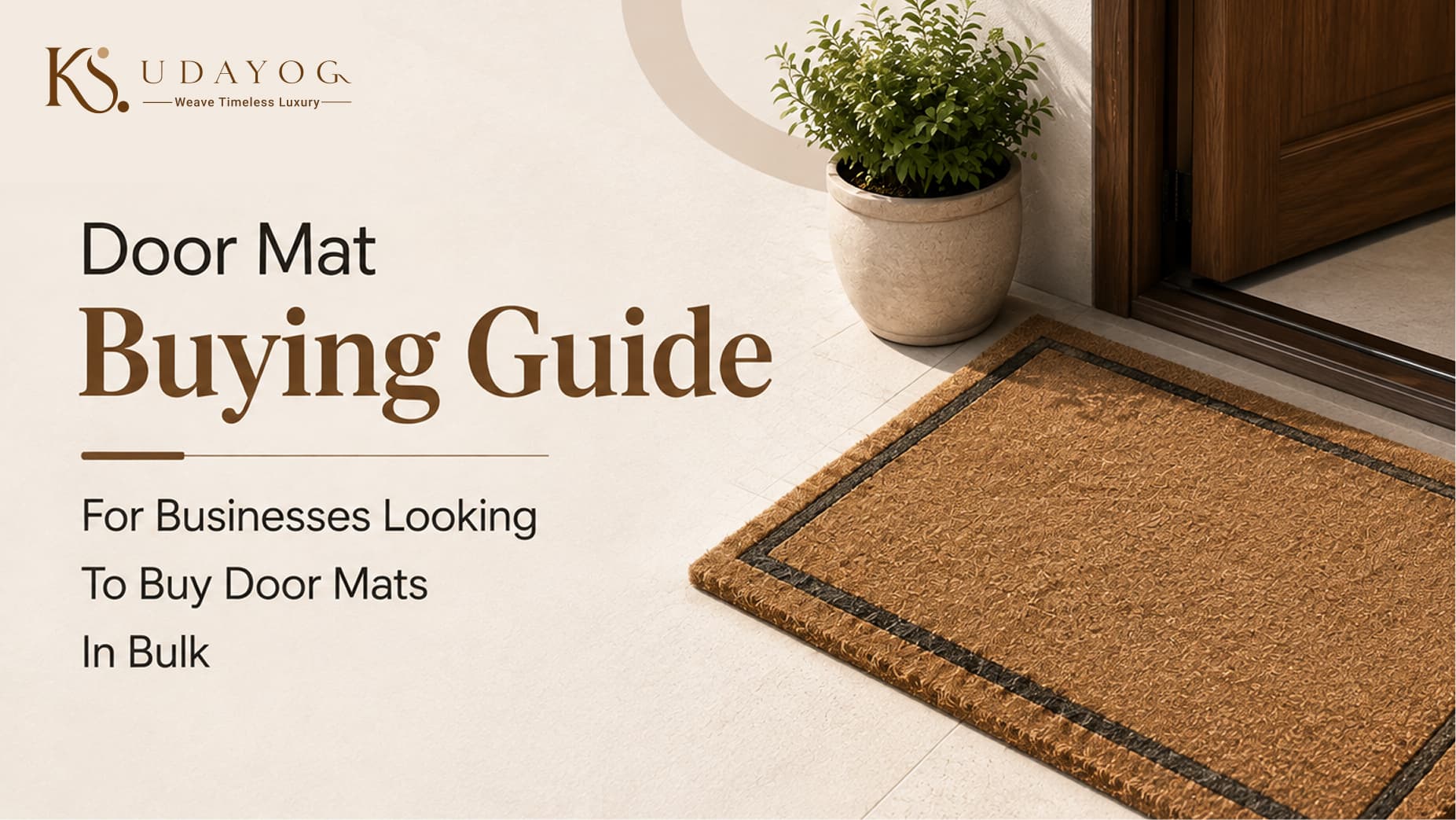
A busy entrance can tell you a lot about the kind of door mat a business needs. A retail store with hundreds of visitors, a hotel lobby exposed to rain, and an office with moderate foot traffic will not necessarily benefit from the same mat.
When buying door mats in bulk, choosing the lowest per-piece price can be tempting, but it may not deliver the best value. Material quality, thickness, water absorption, dirt-trapping ability, size, edge construction, maintenance, and expected lifespan can all affect the real cost of ownership.
Before placing a large order of door mats, you should know exactly what you need from your mats and what a door mat manufacturer and supplier can consistently deliver. This guide explains how to evaluate door mats for bulk purchases, including product specifications, quantities, pricing, quality, and supplier considerations.
How To Order Door Mats In Large Volumes: Practical Tips To Follow
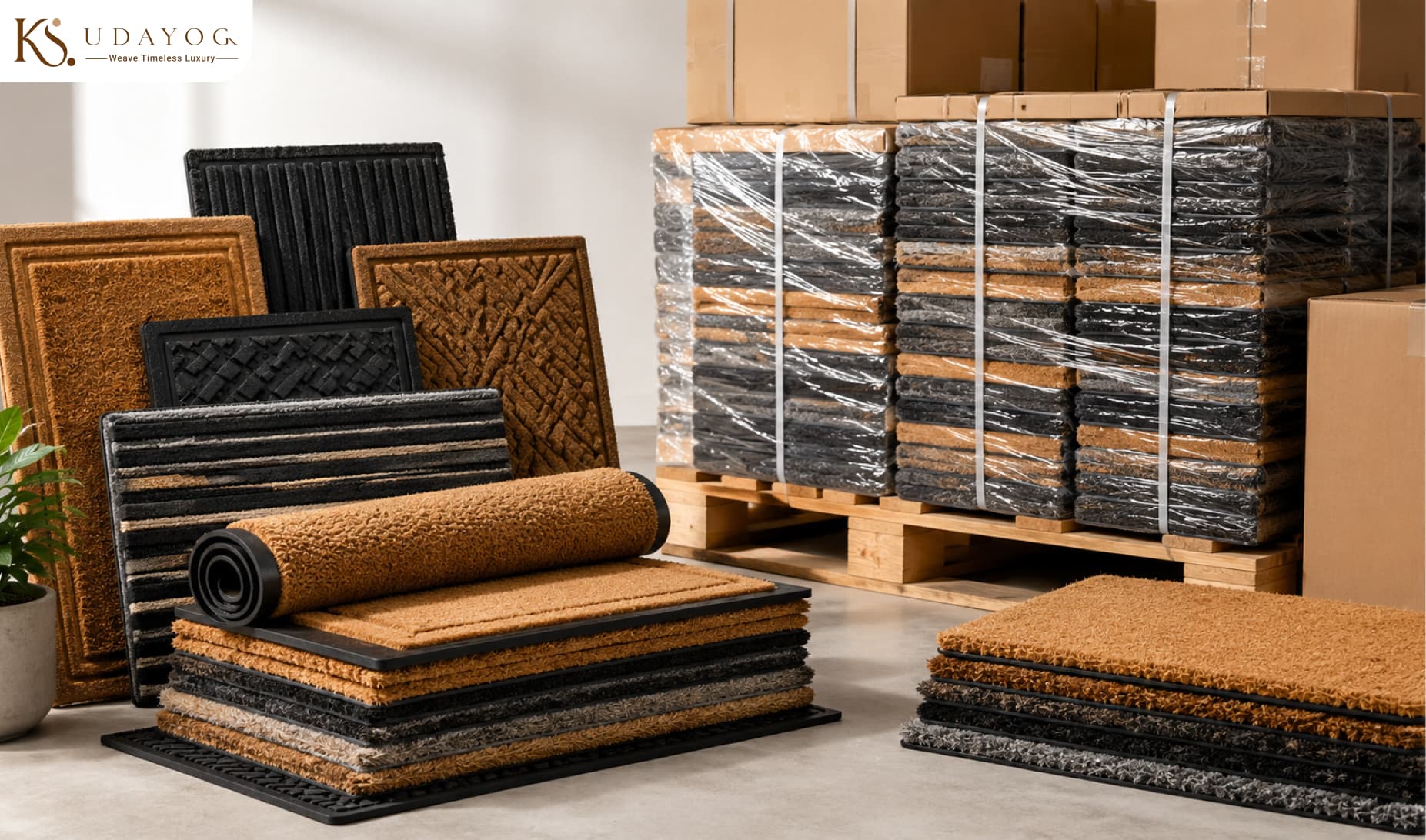
Ordering hundreds or thousands of door mats calls for a different approach than buying a few pieces for one entrance. Supplier capacity, product consistency, customisation, packaging, lead times, and replacement terms can all affect the purchase. The practical considerations that deserve attention before placing a large order are discussed below.
Step 1: Identify Where The Door Mats Will Be Used
You must start by understanding the application. Different spaces have different entrance conditions, foot traffic levels, and maintenance routines.
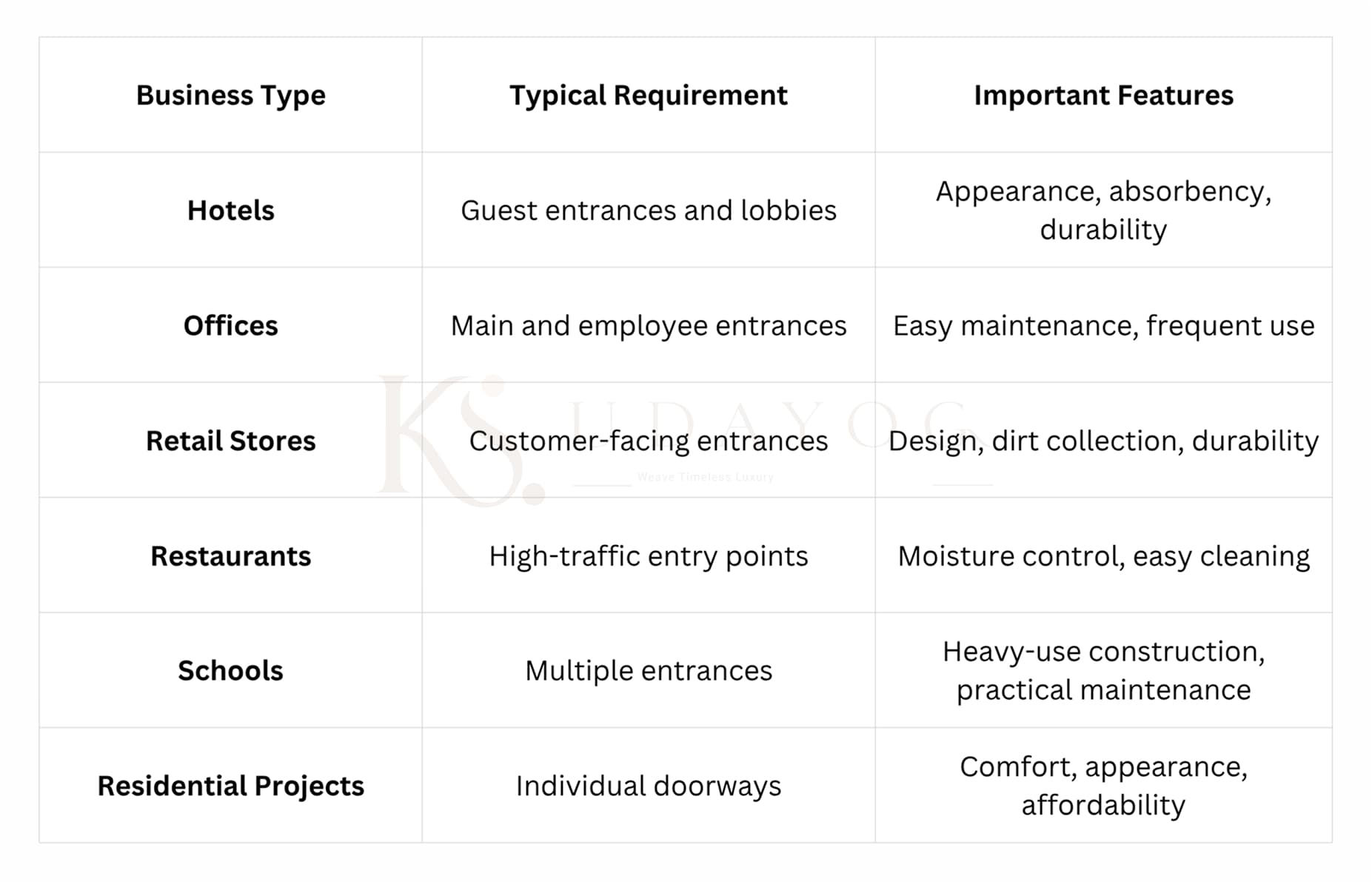
Defining the application first makes it easier to narrow down materials, sizes, construction, and quantities.
Step 2: Choose The Right Door Mat Material
Material has a direct impact on the mat's appearance, feel, durability, cleaning requirements, and ability to handle dirt or moisture.
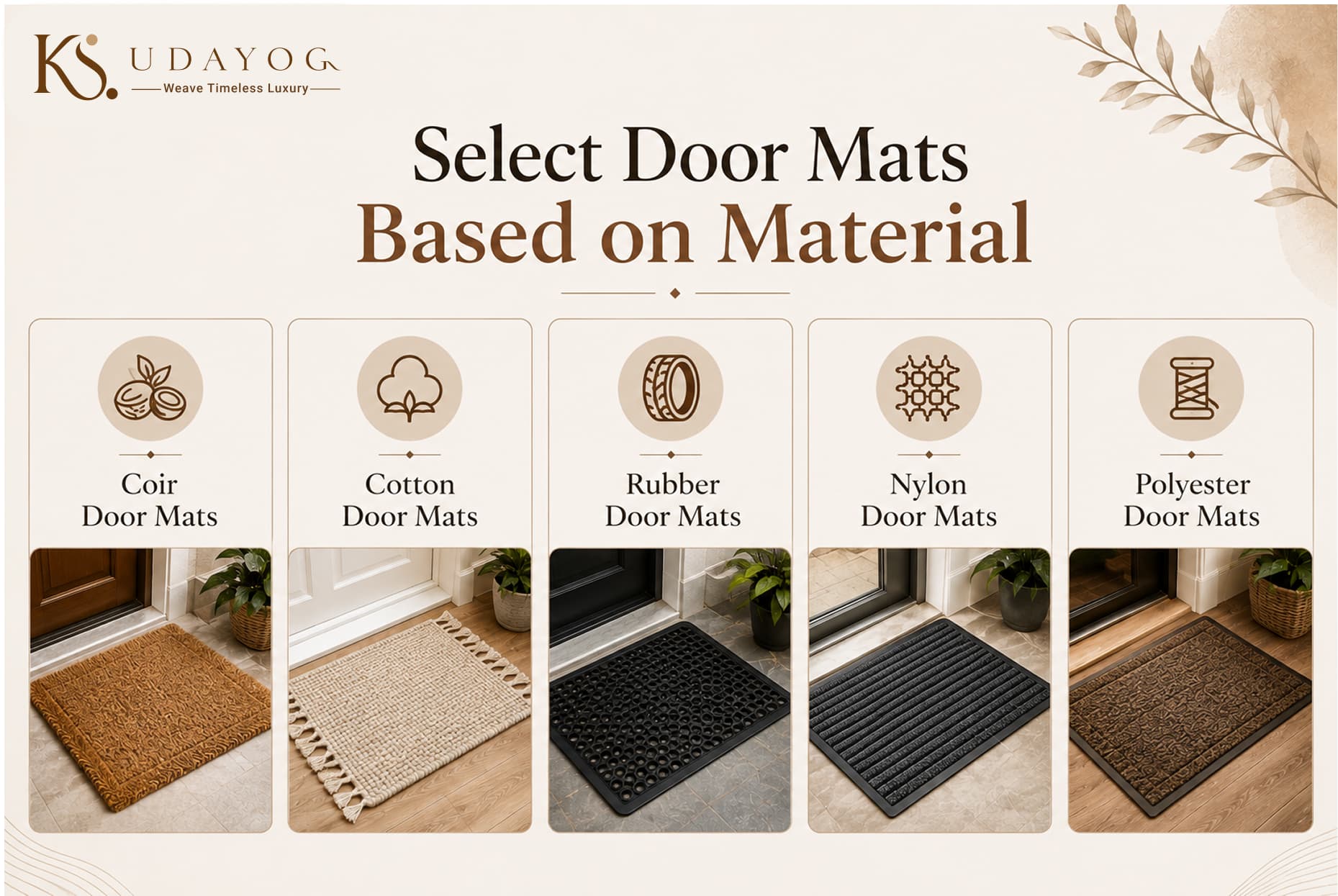
- Coir Door Mats
Coir is made from coconut fibre and is widely associated with natural, textured door mats. Its coarse surface can help scrape dirt from footwear, making it suitable for entrances where removing loose debris is important.
- Cotton Door Mats
Cotton mats offer a softer feel and can provide good moisture absorption. They can work well for residential settings, hospitality areas, and businesses looking for a more textile-focused appearance.
- Rubber Door Mats
Rubber offers a practical option for areas where grip, durability, and moisture resistance are important. Rubber-backed or rubber-based designs can be useful for commercial entrances and high-use areas.
- Nylon Door Mats
Nylon is valued for durability and its ability to handle frequent foot traffic. It can be considered for commercial spaces where regular use and maintenance are expected.
- Polyester Door Mats
Polyester allows a broad range of colours and designs while offering a practical option for different entrance applications.
The best material depends on the location, amount of traffic, exposure to water or dirt, cleaning routine, and desired appearance.
Step 3: Select The Right Size And Shape of Doormat
A door mat should be large enough to serve its intended entrance without creating a movement or placement problem.
Measure the available floor area before ordering in bulk. Consider the width of the doorway, available clearance, surrounding furniture, and whether the mat will be placed inside, outside, or across a larger entrance zone.
Common shapes include:
- Rectangular
- Square
- Semi-circular
- Runner-style
- Custom shapes
Businesses managing multiple locations should also identify whether they need one standard size or several dimensions.
For custom projects, discuss exact measurements with the supplier before production.
Step 4: Consider Foot Traffic
Not every entrance experiences the same amount of use.
A small office with limited visitors may have different requirements from a shopping store, hotel, airport facility, or restaurant.
High-traffic entrances generally need a mat that can withstand repeated use without quickly losing its structure or appearance. Lower-traffic areas may provide more flexibility in terms of material and construction.
Before selecting a product, estimate how many people use the entrance each day and whether the mat will be exposed to heavy dirt, moisture, or outdoor conditions.
Step 5: Check Dirt And Moisture Handling
One of the main reasons businesses use entrance mats is to reduce the amount of dirt and moisture carried into the building.
If the entrance regularly encounters rain, mud, or wet footwear, consider a product designed for the relevant conditions. Areas exposed primarily to dry dust may require greater emphasis on scraping and dirt collection.
For larger commercial entrances, businesses may also use different mats in sequence—for example, an outdoor mat to remove coarse debris followed by an indoor mat designed to collect finer dirt and moisture.
Step 6: Examine The Backing
The underside of a door mat deserves as much attention as its visible surface.
A mat that shifts repeatedly can become inconvenient and may create a trip hazard, particularly in busy entrances. The backing should therefore be appropriate for the flooring and intended environment.
Before buying in bulk, check:
- Backing material
- Grip characteristics
- Compatibility with the floor
- Resistance to moisture
- Attachment to the upper surface
- Performance after repeated cleaning
For commercial buyers, it is worth asking the supplier how the backing is expected to perform under regular use and maintenance.
Step 7: Choose A Design That Fits The Business
A door mat can be functional without looking out of place.
Hotels, offices, restaurants, stores, and corporate buildings may want colours and patterns that complement their interiors or brand identity.
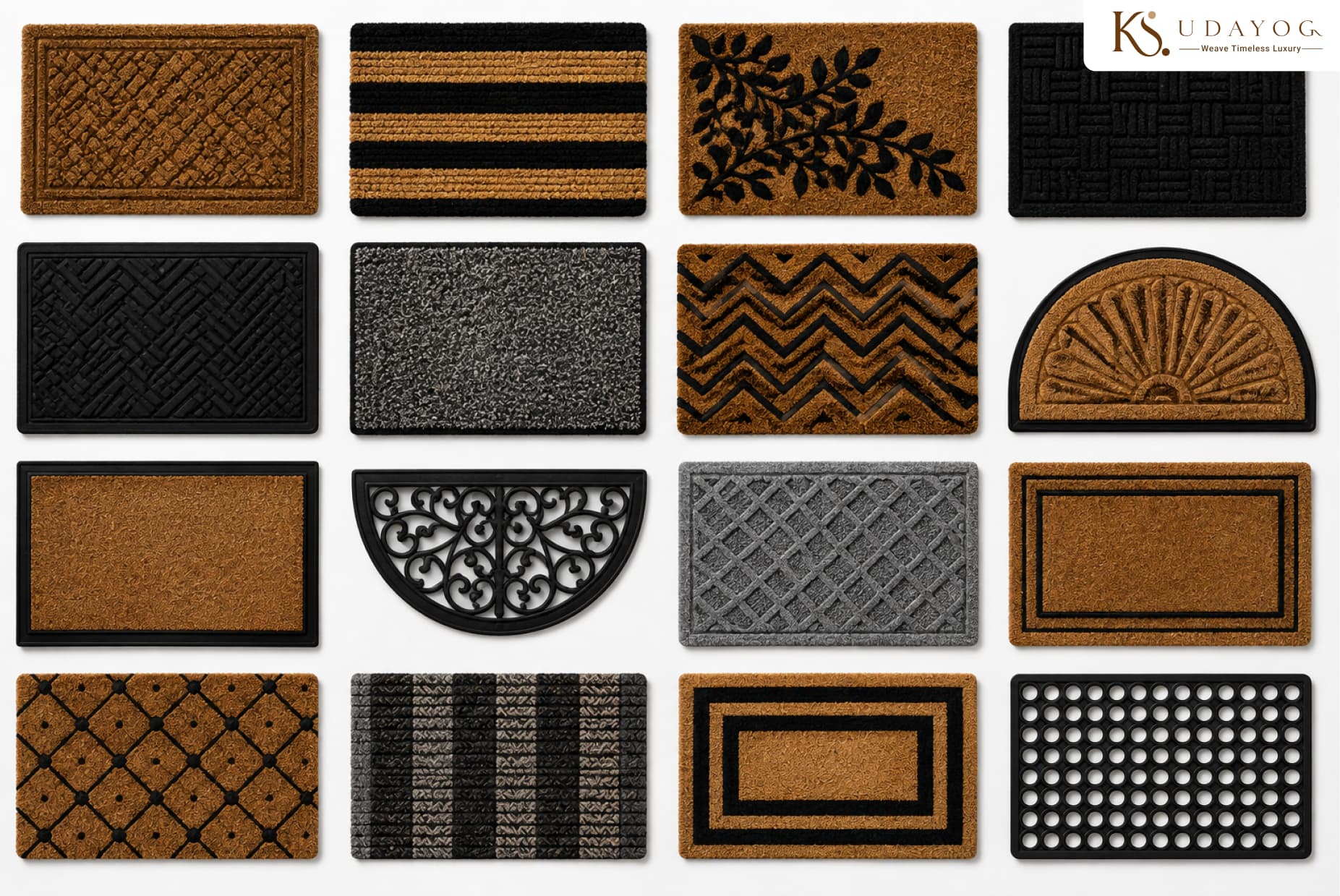
Retailers also need to consider what their customers are likely to prefer. A collection can include neutral shades, traditional patterns, contemporary designs, natural textures, and logo or customized options where available.
For businesses buying for multiple locations, maintaining a coordinated appearance can also create a more organised entrance experience.
Step 8: Decide Whether Customisation Is Needed
Bulk buying can make customized door mats a practical option for certain businesses. Depending on the manufacturer's capabilities, customisation may include:
- Logo or brand name
- Custom dimensions
- Specific colours
- Patterns
- Shapes
- Material combinations
- Backing requirements
- Private-label packaging
Custom door mats can be particularly useful for hotels, offices, retail chains, corporate buildings, and promotional applications.
Before approving a customized order, ask about sampling, artwork requirements, MOQ, pricing, production time, and colour matching.
Step 9: Compare Quality Before Price
A low-cost door mat may appear attractive when buying hundreds of pieces, but the initial price should not be the only deciding factor.
Compare the actual product specifications between suppliers. Look at material, construction, dimensions, backing, finishing, durability, cleaning requirements, and expected application.
For example, two mats may have similar dimensions and photographs but use different materials or construction methods. Their performance and lifespan may therefore differ.
A better comparison is cost against suitability and expected use, rather than price alone.
Step 10: Understand MOQ And Bulk Pricing
Minimum Order Quantity, or MOQ, tells you how many pieces a supplier requires for an order or particular design.
This matters because businesses may need different quantities depending on their number of locations.
Before confirming an order, ask:
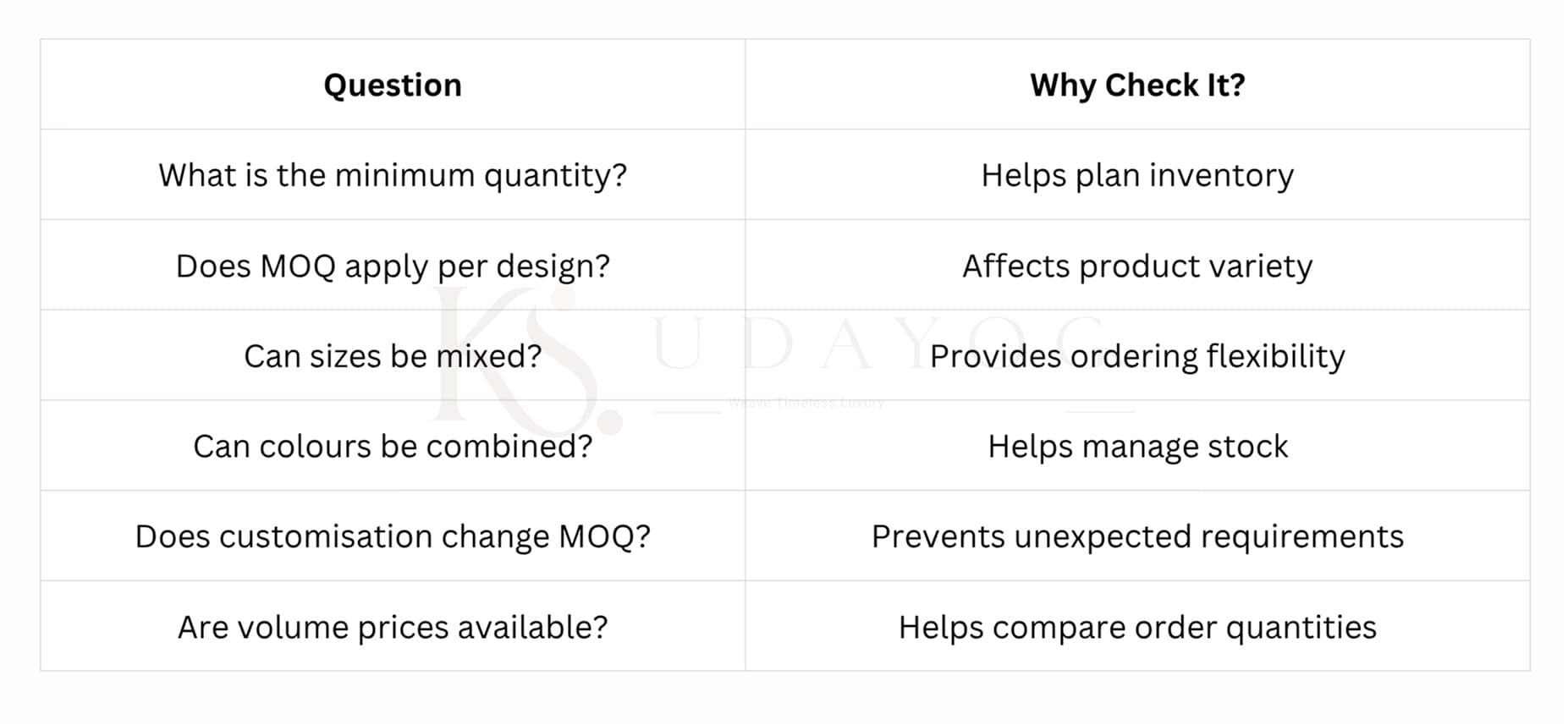
Clear MOQ terms make it easier to determine the most practical order size.
Step 11: Request Samples Before A Large Order
Photographs can help with initial selection, but a physical sample gives a much clearer understanding of the product.
Check the material, thickness, texture, colour, dimensions, backing, edges, and overall finishing. If the mat will be used in a commercial environment, consider whether it feels appropriate for the expected traffic and maintenance routine.
For customized products, approve the sample or prototype before the complete order enters production.
Step 12: Check Supplier Manufacturing Capabilities
A suitable supplier should be able to explain how the mats are made and what they can provide at your required volume.
Ask about:
- Available materials
- Manufacturing methods
- Product sizes
- Customisation
- MOQ
- Production capacity
- Quality checks
- Packaging
- Delivery timelines
Businesses planning recurring purchases should also consider whether the supplier can maintain the required specifications across future orders.
Step 13: Confirm Production And Delivery Timelines
Bulk orders require advance planning.
Ask how long production will take after specifications and samples are approved. Also clarify packaging, dispatch schedules, transportation, and delivery arrangements.
This becomes particularly important for new store openings, hotel projects, seasonal campaigns, and orders covering multiple business locations.
A supplier may have the right product, but a delivery date that does not match your project schedule can still create problems.
Step 14: Inspect The Door Mat Order Before Distribution
When the bulk shipment arrives, inspect the products before sending them to stores, branches, hotels, or customers.
Check the delivered quantity against the purchase order and review the mats for:
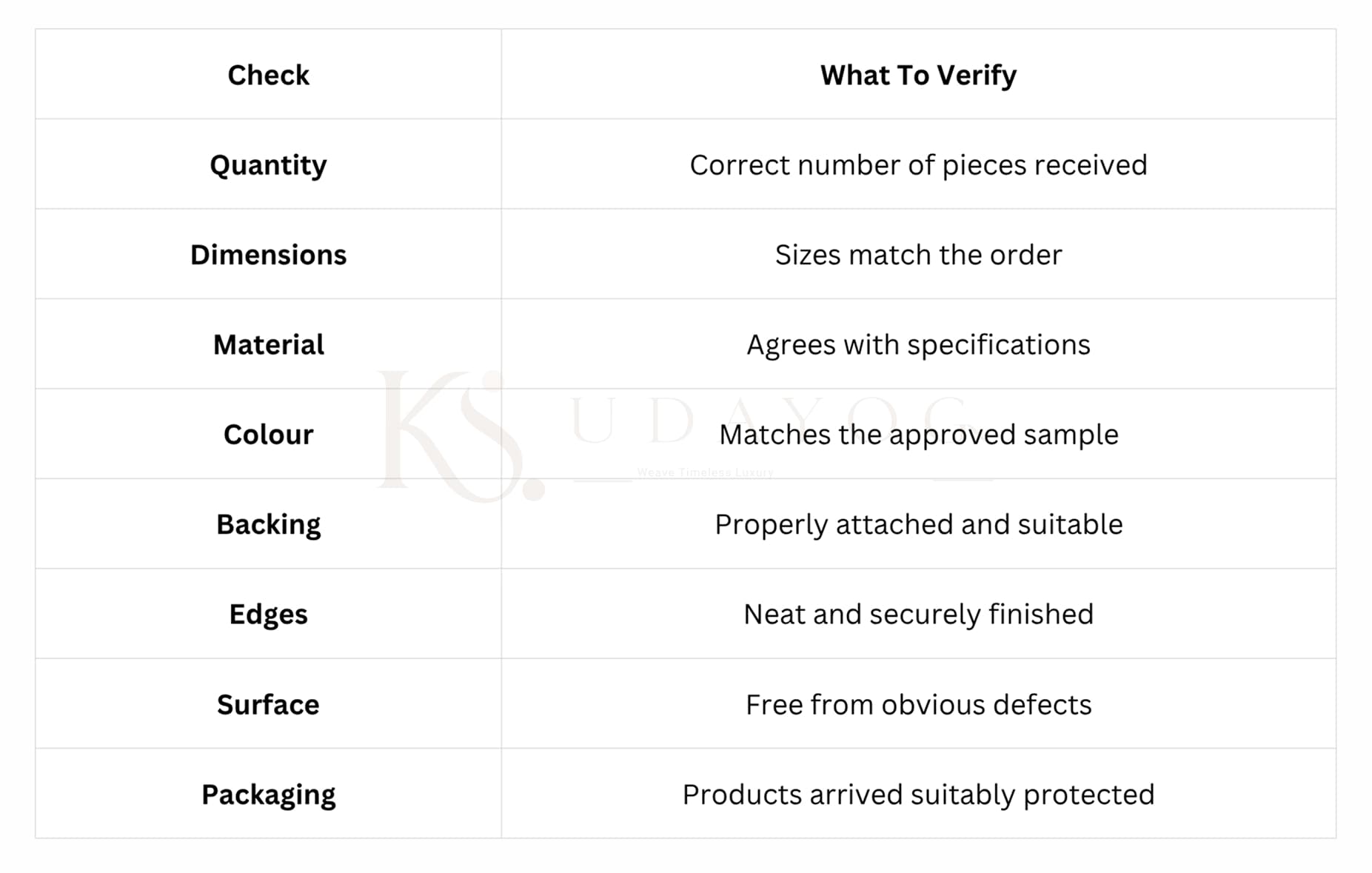
Early inspection makes it easier to identify discrepancies before the products enter regular use.
Why Door Mat Selection Matters For Commercial Spaces?
Door mats do more than improve the appearance of an entrance. They can help collect dirt and moisture from footwear before it spreads across indoor flooring, making them a practical part of entrance maintenance.
Commercial entrances often experience heavier foot traffic than residential doorways. Hotels, offices, retail stores, restaurants, and other facilities may therefore need mats that can withstand frequent use, regular cleaning, and changing levels of dirt or moisture.
The right choice also depends on where the mat will be placed. An outdoor entrance, hotel lobby, shop doorway, and office corridor can have very different requirements, so the material, construction, size, backing, and maintenance needs should be matched to the actual application.
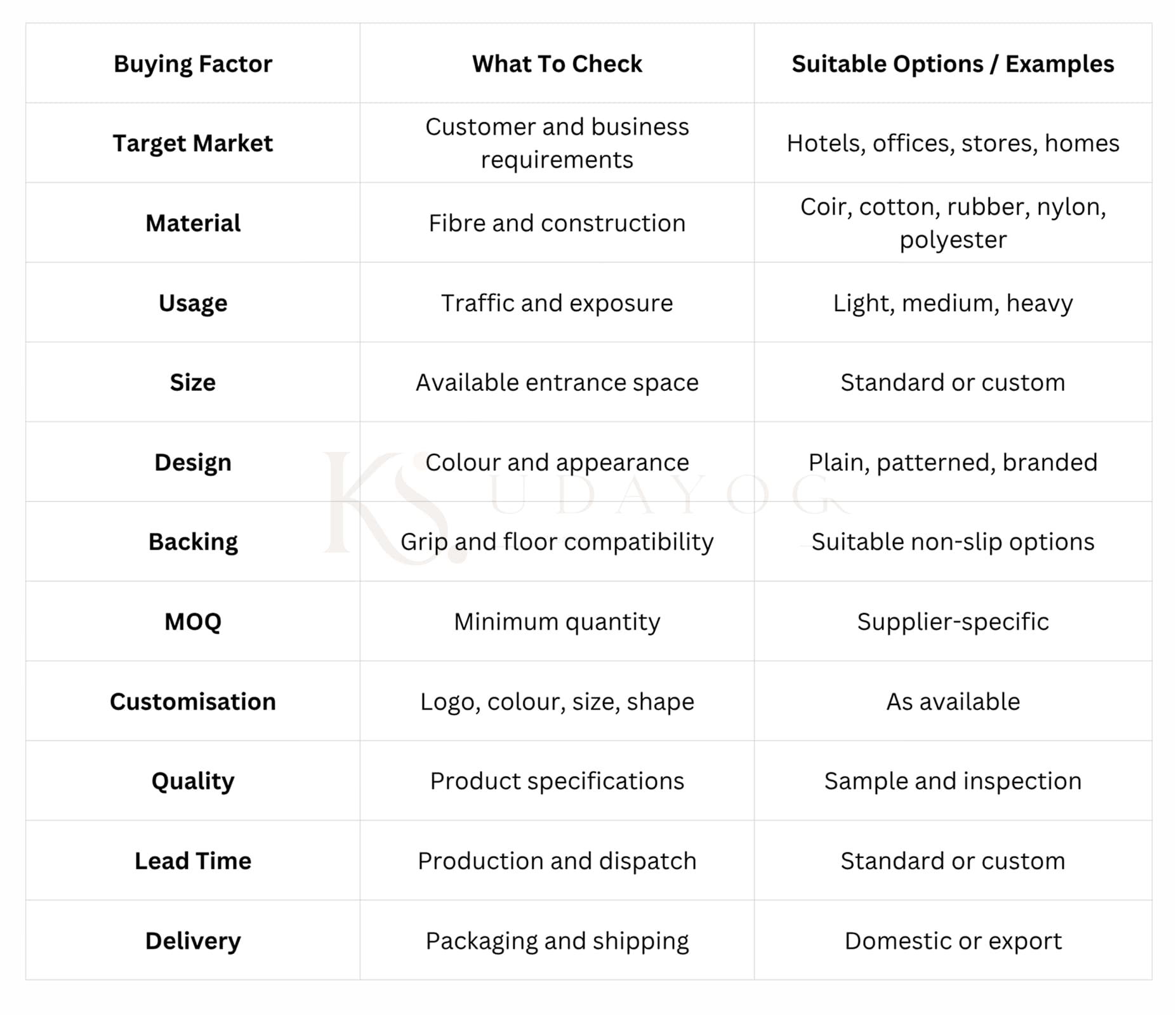
Complete Bulk Door Mat Buying Checklist For Businesses
Before placing your order, review these key factors:
How To Find The Best Door Mat Supplier For Wholesale Orders?
Finding a suitable wholesale door mat supplier requires more than comparing catalogues and quotations. Follow these steps to assess whether a supplier can meet your product, quality, quantity, and delivery requirements.
1. Check The Product Range
Look for suppliers offering the materials, sizes, designs, constructions, and finishes relevant to your requirements. A broader product range can also make future sourcing easier.
2. Verify Manufacturing Capabilities
Find out whether the supplier manufactures the products or sources them from other manufacturers. Ask about production methods, available materials, capacity, and ability to handle bulk quantities.
3. Compare MOQ And Pricing
Check the minimum order quantity for standard and customized products. Compare pricing at different quantities, while also considering packaging, customisation, shipping, and other applicable costs.
4. Request Product Samples
Request samples before committing to a large order. Examine the material, dimensions, texture, colour, backing, stitching, and overall finishing to assess whether the product meets your expectations.
5. Ask About Customisation
If you require specific colours, sizes, shapes, patterns, logos, or packaging, confirm whether the supplier can provide them. Also ask how customisation affects MOQ, pricing, sampling, and lead time.
6. Understand Quality Control
Ask how products are inspected before dispatch. Confirm the quality standards for materials, dimensions, colours, backing, edges, construction, and finishing, particularly for large or repeat orders.
7. Confirm Production And Delivery Timelines
Discuss production capacity, lead time, packaging, dispatch, and delivery arrangements before placing the order. Make sure the supplier can meet your required schedule.
8. Evaluate Communication And Support
Pay attention to how clearly the supplier responds to questions and explains specifications, pricing, and production details. Good communication becomes particularly important when handling customized or recurring orders.
9. Consider Long-Term Supply Capability
If you expect repeat purchases, check whether the supplier can maintain product specifications and fulfil future orders at the required volume. A supplier capable of supporting your long-term requirements may be more valuable than one offering only the lowest initial price.
Why Businesses Can Consider KS Udayog For Bulk Door Mats
KS Udayog provides textile manufacturing solutions for businesses, retailers, hospitality properties, and other commercial buyers. Buyers can discuss door mat requirements based on material, dimensions, design, quantity, finishing, and intended application. The team can also help businesses evaluate suitable product options for different entrance environments and discuss customized requirements where applicable.
Final Thoughts
Buying door mats in bulk becomes easier when the purchase starts with the application rather than the price. Consider where the mats will be used, how much traffic they will receive, which material suits the environment, and what size and backing the entrance requires.
Businesses should then compare samples, quality, MOQ, customisation, production capacity, pricing, and delivery terms before committing to a large order.
A carefully planned bulk purchase can help businesses maintain suitable entrance products across multiple locations while keeping product selection, inventory, and costs under better control.
If you need door mats for multiple stores, hotels, offices, or commercial locations, you can share your requirements with KS Udayog to explore suitable bulk options for your business.
Frequently Asked Questions (FAQs)
How Many Door Mats Should A Business Order?
The quantity depends on the number of entrances, business locations, replacement requirements, and expected usage. Businesses should calculate current requirements while allowing reasonable stock for replacements.
Can Door Mats Be customized For Businesses?
Yes, depending on the manufacturer's capabilities, businesses may customize dimensions, colours, designs, shapes, logos, materials, and packaging.
Should Businesses Request Samples Before Buying Door Mats In Bulk?
Yes. A physical sample allows buyers to assess material, dimensions, colour, backing, texture, finishing, and overall suitability before committing to a large order.
What Is MOQ When Buying Door Mats In Bulk?
MOQ means Minimum Order Quantity. It is the smallest quantity a supplier requires for an order, design, size, or customized product, depending on their terms.
Are Non-Slip Door Mats Suitable For Commercial Entrances?
A suitable non-slip backing can help reduce unwanted movement, but businesses should ensure that the backing is compatible with the specific flooring and intended environment.
How Can Businesses Find A Suitable Bulk Door Mat Supplier?
Compare suppliers based on product quality, materials, manufacturing capabilities, MOQ, customisation, sampling, quality control, production capacity, packaging, pricing, and delivery terms.