Buying premium quality rugs in bulk can bring better pricing, a wider product selection, and a steady supply for your business. But a large order also leaves less room for costly mistakes. A small issue with material, sizing, colour, or finishing can become a much bigger problem when the same product arrives in dozens or hundreds of pieces.
For a retailer, the wrong collection can sit on shelves longer than expected. A hotel may receive rugs that do not perform well under frequent use. A distributor could face complaints because the delivered products differ from the approved sample.
That is why bulk rug purchasing needs more thought than simply finding a rug manufacturer and supplier with the lowest quotation.
The good news? Most problems can be avoided before the order is confirmed. Here, we define the ten mistakes worth watching for when sourcing rugs for your business. Let’s start.
1. Buying Only On The Basis of Price
A low quotation can look attractive, especially when the order quantity is large. But price alone tells you very little about the material, construction, finishing, or expected lifespan of a rug.
Two rugs may have similar designs while differing significantly in fibre quality, density, backing, stitching, and production standards.
Instead of asking only, “What is the price per piece of this rug?”, compare what you are actually receiving for that price. Material specifications, dimensions, construction, finishing, packaging, and delivery terms should all form part of the discussion.
A slightly higher initial cost to buy a rug can make more sense when the product offers better performance and fewer quality-related issues.
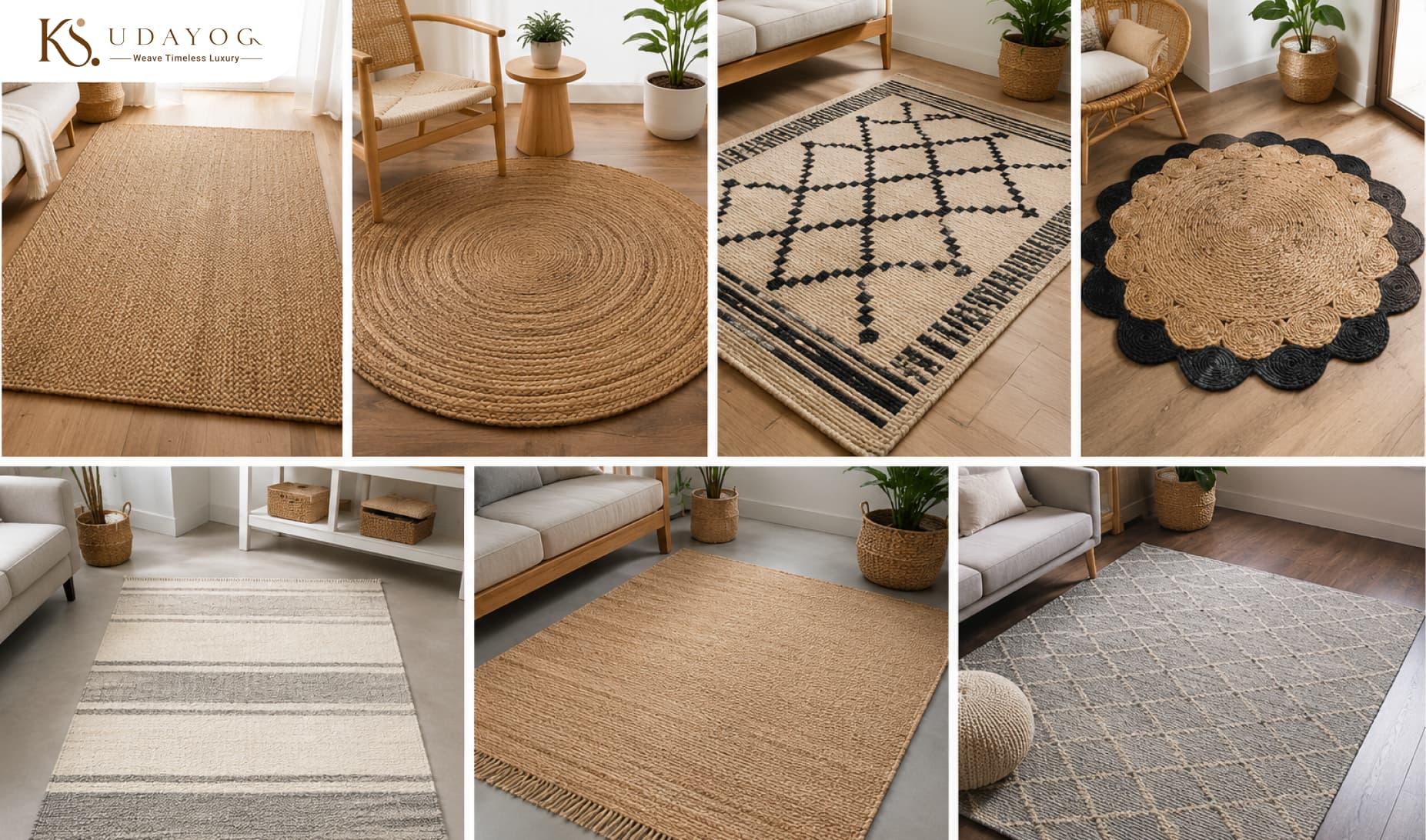
2. Choosing Designs Without Knowing Your Customers
A rug may look excellent in a rug manufacturer's catalogue and still fail to sell in your market.
Retailers need to think about their customers before selecting colours, patterns, sizes, and materials. A collection aimed at modern apartments may need a very different visual direction from one intended for traditional homes.
Hotels and interior projects have another consideration: the rug needs to complement the existing décor.
Review your customer profile, price range, preferred styles, and intended use before finalising the collection. Bulk buying works best when the products have a clear reason to be in your inventory.
3. Ignoring The Material
Material affects the way a rug feels, looks, wears, and needs to be maintained. Wool, cotton, jute, viscose, polypropylene, polyester, and blended fibres each bring different characteristics.
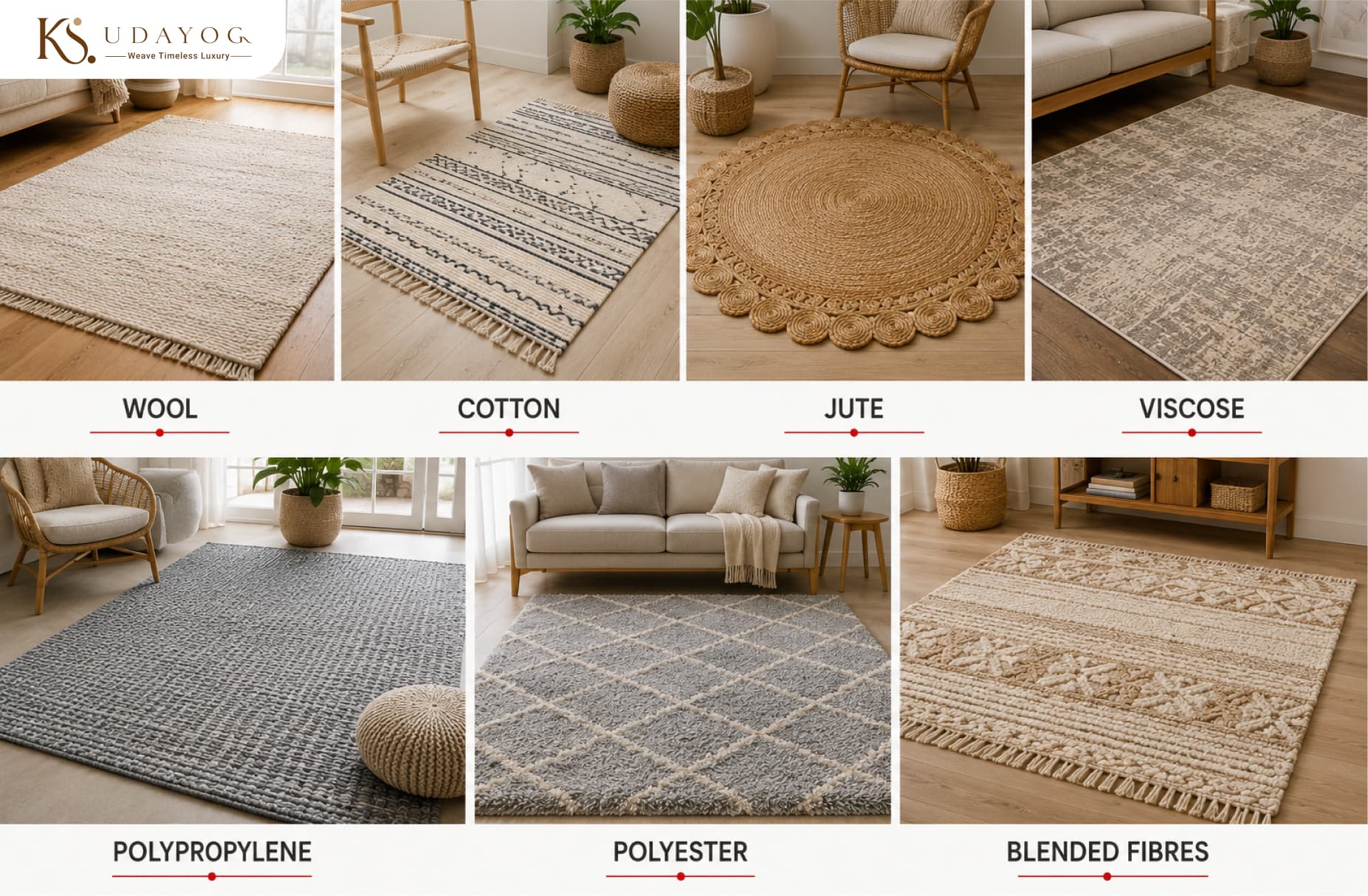
A soft decorative rug may work beautifully in a bedroom but may not be the best fit for a busy commercial entrance. Ask the rug manufacturer what material has been used and why it suits the intended application.
Also discuss care requirements, expected use, and the characteristics that matter most for your customers. Material selection should be based on application, not just appearance.
4. Treating The Sample As The Complete Order
Approving a sample is important, but it should not be the end of the quality discussion.
Before placing a large order, record the specifications of the approved sample. This can include material, size, colour, design, construction, pile, backing, finishing, and other agreed details.
Why does this matter? Because bulk production needs a clear reference.
A written specification gives both the buyer and manufacturer something concrete to work against. It also makes it easier to identify differences if the delivered products do not match the agreed requirements.
5. Forgetting To Check Dimensions
Size is easy to overlook when you are focused on design and pricing.
For retailers, inconsistent dimensions can create problems when products are displayed together. Hotels, showrooms, and interior projects may have specific spaces that require accurate measurements.
Always confirm the finished dimensions before production begins. If you need multiple sizes, list each one clearly rather than assuming the manufacturer will interpret the requirement from a general description.
Custom sizes should also be discussed before the quotation is finalised because they may affect production and pricing.
6. Overlooking Minimum Order Quantities
MOQ, or minimum order quantity, can have a major impact on your purchasing decision.
A supplier may quote an attractive price, but the minimum quantity required to achieve that price may not suit your business. Retailers with limited storage space can end up holding more stock than they can reasonably sell.
Ask about MOQ for each design, colour, size, and material. Also find out whether different designs can be combined within an order.
Clear MOQ terms help you plan inventory without tying up unnecessary capital.
7. Not Asking About Production Capacity
Can the rug manufacturer actually handle your order within the required timeframe?
This question becomes particularly important for large hotel projects, retail launches, seasonal collections, and distributor orders. A rug supplier may have attractive products but limited production capacity for your required volume.
Discuss expected quantities, production timelines, sampling, packaging, and dispatch schedules before confirming the purchase.
A realistic production plan is much safer than relying on an informal delivery promise.
8. Ignoring Quality Control
A bulk order should not be treated as one large transaction. It should be viewed as a collection of products that need to meet the same agreed standards. Ask what the manufacturer checks before dispatch. Depending on the rug type, relevant checks may include:
- Dimensions
- Colour consistency
- Surface and pile
- Edge finishing
- Backing
- Stitching
- Visible defects
- Overall appearance
For larger orders, buyers can also discuss inspection procedures and sample approval before production starts.
Quality control becomes especially important when the rugs will represent your own retail business or hospitality property.
9. Failing To Discuss Packaging And Delivery
Even a well-made rug can arrive in poor condition if packaging and transportation are not handled properly.
Before placing an order, clarify how the rugs will be packed, protected, labelled, and prepared for transportation. Businesses receiving large quantities should also understand delivery schedules and shipping responsibilities.
For international buyers, additional considerations may include export documentation, freight arrangements, customs requirements, and destination-specific packaging expectations.
Do not leave these details until the goods are ready to leave the factory. They should be part of the purchasing conversation from the beginning.
10. Choosing A Supplier Without Checking Their Manufacturing Capability
A supplier's catalogue may tell you what they sell. It does not always tell you how they produce it.
Businesses sourcing rugs in bulk should look beyond product photographs. While selecting a rug manufacturer for a bulk order, ask about their rug manufacturing experience, materials, production capabilities, customisation, quality checks, MOQ, and the types of buyers they serve.
A manufacturer that understands your requirements can also help you identify practical alternatives when a particular material, construction, size, or design does not suit the project.
For long-term sourcing, this relationship can become more valuable than finding the lowest quotation for a single order.
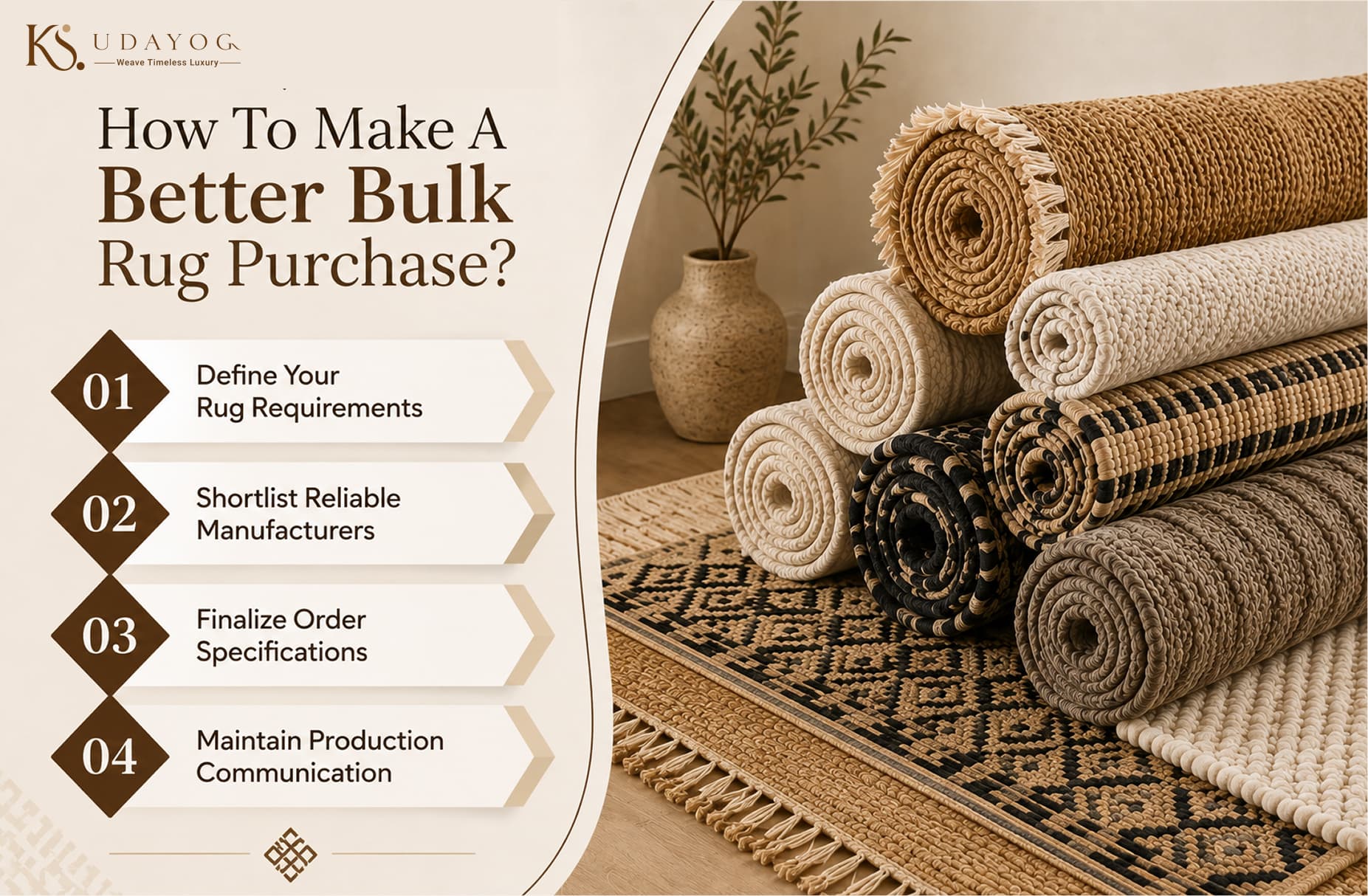
How To Make A Better Bulk Rug Purchase?
Avoiding these mistakes becomes easier when you follow a simple purchasing process.
1. You can start with your business requirements. Define the rug types, sizes, materials, designs, quantities, target price range, and intended application.
2. Next, shortlist manufacturers based on their capabilities rather than catalogue size alone. Request samples and compare the actual products.
3. Once you have selected a product, document the specifications clearly. Discuss MOQ, production time, quality checks, packaging, delivery, and payment terms before approving the order.
4. Finally, keep communication open throughout production. A quick clarification before manufacturing can prevent a much larger problem after delivery.
The objective is not to make the purchasing process complicated. It is to remove uncertainty before your money and inventory are committed.
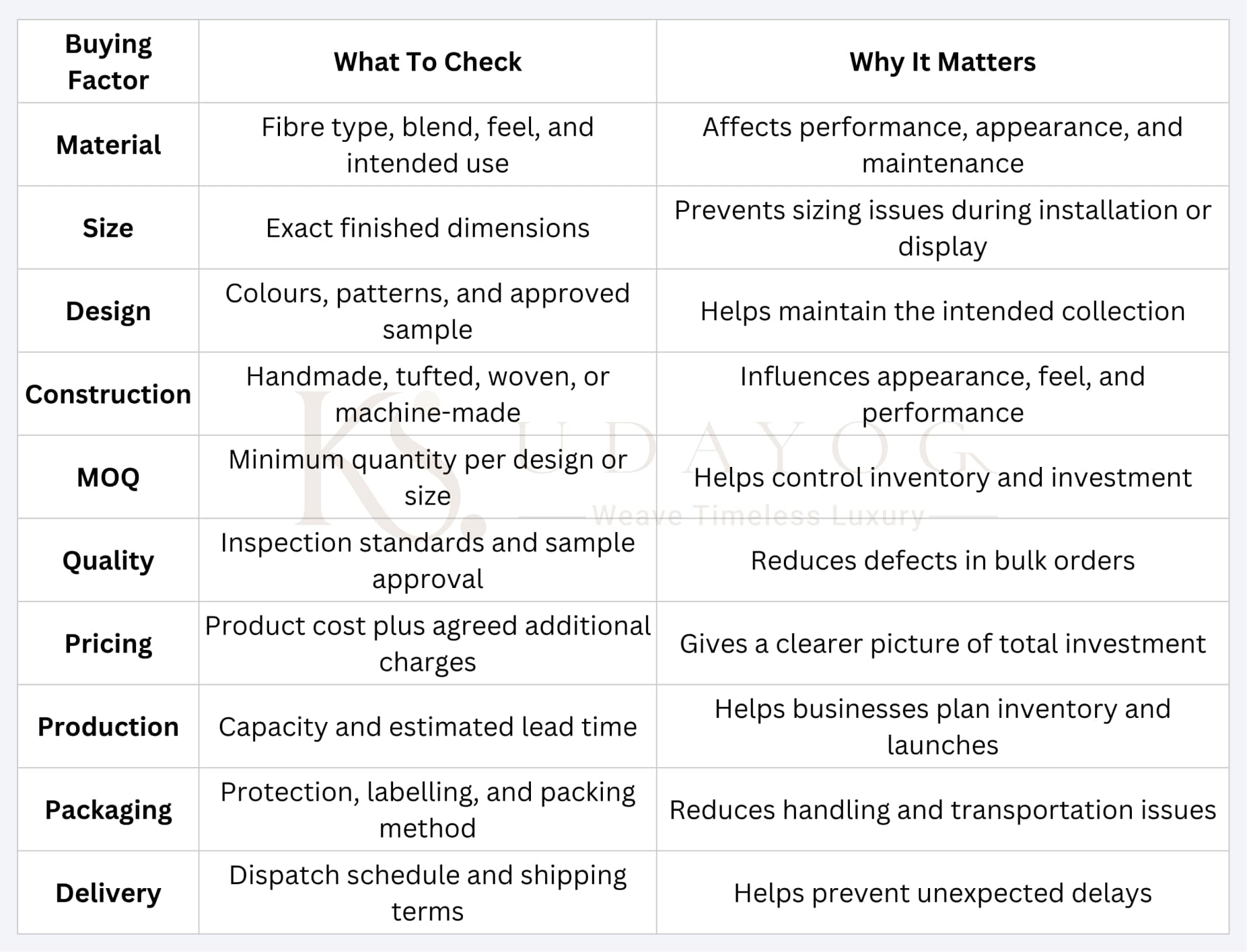
Bulk Rug Buying: What To Check Before Placing An Order To Rug Manufacturer
A bulk rug order involves more than confirming designs and quantities. Before you approve production, review the key specifications, commercial terms, and supplier commitments so there are fewer surprises when the order arrives.
A simple pre-order check can also help you compare manufacturers on more than price and identify details that could affect your inventory, budget, and customer satisfaction.
A buyer can use this as a quick pre-order checklist:
Why KS Udayog Can Be A Practical Partner For Bulk Rug Buyers?
KS Udayog works with retailers, distributors, hospitality businesses, showrooms, and other buyers looking for rugs and related textile products in different quantities and specifications. Our manufacturing approach allows buyers to discuss materials, designs, dimensions, finishing, custom requirements, and bulk quantities before finalising an order.
We understand that a retailer may need a commercially appealing collection, while a hotel or project buyer may have specific requirements for size, appearance, and performance. By discussing these details before production, we aim to provide rug solutions that align with the intended application and purchasing requirements.
Conclusion
Bulk rug purchasing does not have to become complicated or risky. Most expensive problems begin with small oversights, an unclear specification, unsuitable material, unrealistic MOQ, missed delivery details, or a supplier chosen only because of price.
Take time to assess the product, manufacturer, and complete order terms before committing. Request samples, confirm specifications, discuss quality checks, and make sure the supplier can support the quantity and timeline you need.
A well-planned bulk order can give your business better product consistency, smoother inventory planning, and stronger value for your investment.
Looking for rugs for your retail store, hotel, showroom, or business? Get a catalogue of premium rugs and discuss your bulk rug requirements with our team.
Frequently Asked Questions (FAQs)
What Should Businesses Check Before Buying Rugs In Bulk?
Businesses should check material, dimensions, construction, design, quality, MOQ, pricing, production capacity, packaging, delivery timelines, and the manufacturer's ability to meet agreed specifications.
Is The Cheapest Bulk Rug Always The Best Option?
No. A lower price may come with differences in material, construction, finishing, or durability. Buyers should compare the complete product specification rather than price alone.
Why Is MOQ Important When Buying Rugs In Bulk?
MOQ determines the minimum quantity a manufacturer will produce for an order or particular design. It can affect inventory requirements, investment, storage, and the number of designs a retailer can carry.
Should I Request A Rug Sample Before Placing A Bulk Order?
Yes. A sample allows you to assess the material, colour, size, texture, construction, finishing, and overall appearance before approving a larger production quantity.
How Can Retailers Select Rugs That Are Likely To Sell?
Retailers should consider their target customers, preferred designs, price range, room sizes, seasonal demand, and existing product collection before deciding which rugs to purchase in bulk.
What Quality Checks Are Important For Bulk Rug Orders?
Important checks can include dimensions, colour, surface, pile, backing, stitching, edge finishing, visible defects, and compliance with the approved sample or product specifications.